This website presents our Emergency App, a smart solution for fast and reliable communication between citizens and emergency services. It demonstrates how users can quickly report incidents, share real-time location, upload photos, and request multiple services through a simple and intuitive interface. The website includes an overview of the problem, our proposed solution, key features, system workflow, technologies used, diagrams, application screenshots, and a full project demo with an elevator pitch.
Emergency Services
Real-Time Location
Multi-Service Requests
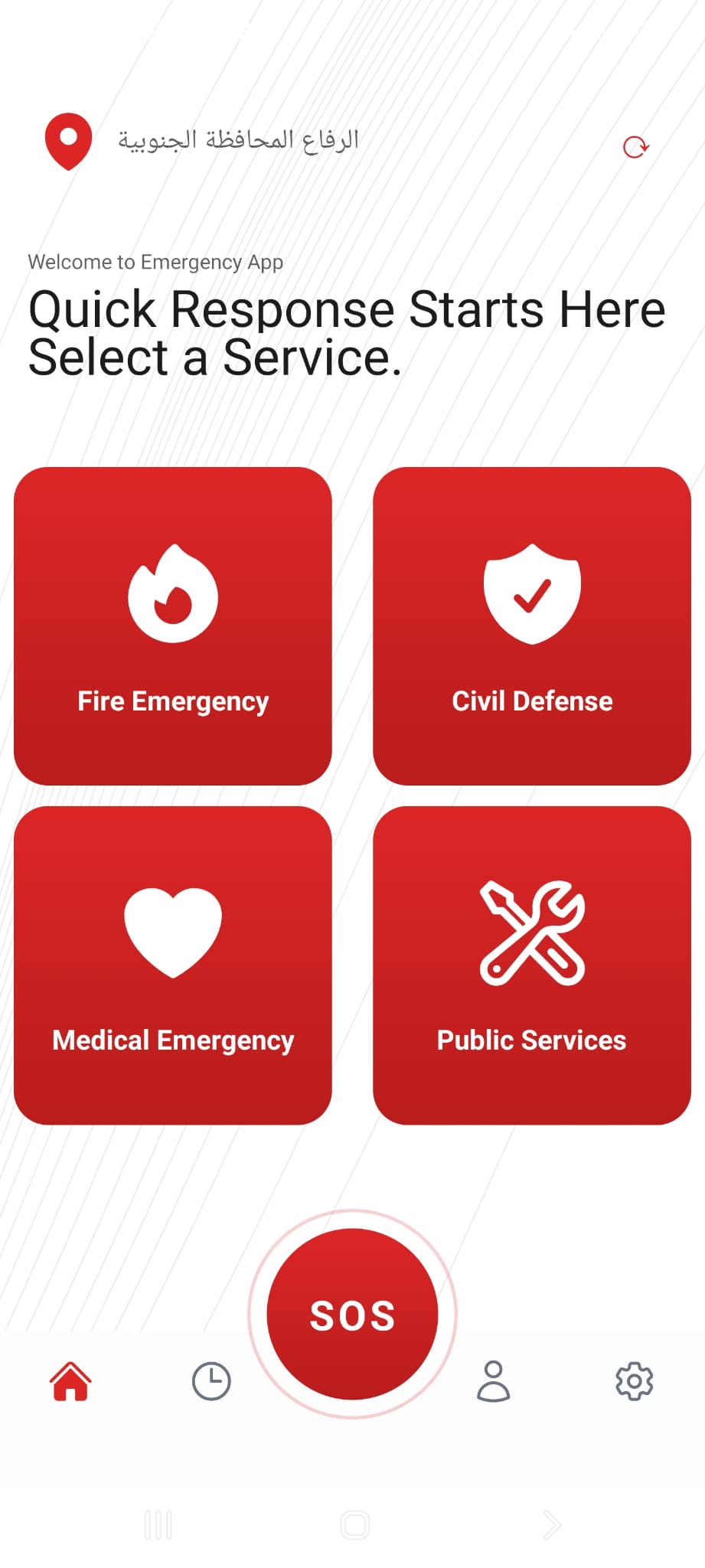
Quickly select the needed emergency service.
Simple interface designed for urgent situations.
This senior project addresses the critical need for speed and precision in emergency communications between citizens and First Responders, including Fire Emergency, Civil Defense, and Medical Emergency units, as well as Public Services. Traditional voice-based reporting often suffers from delays, location inaccuracies, and communication barriers. To mitigate these issues, a mobile application was developed to enable real-time reporting integrated with GPS coordinates, multimedia attachments, and detailed incident descriptions. The system facilitates instantaneous data transmission to the relevant agencies and allows users to track response status in real-time. By minimizing human error and streamlining the reporting process, this project demonstrates how leveraging mobile technology can optimize emergency response times and potentially save lives.
In life-threatening circumstances, citizens and First Responders, such as Civil defense, Medical Emergency, and Fire Emergency, need to talk to each other promptly and clearly. The existing system, which mostly depends on emergency phone calls, often makes mistakes and takes too long. Some of the problems are too many calls, miscommunication, and not being able to send specific GPS locations or pictures of the incident. These issues make it less likely that lives will be saved and slow down how quickly people react. The major problem may be broken down into several smaller problems:
The proposed solution is a mobile emergency application that improves communication between citizens and emergency services through a fast and user-friendly interface. The system allows users to quickly select the required service, provide detailed case information, and send accurate reports in real time.
Allows users to quickly report fire-related incidents and request immediate assistance.
Allows users to request civil defence support for safety and protection in emergency situations.
Allows users to request urgent medical assistance with fast and reliable communication.
Allows users to report public service issues such as road damage, infrastructure faults, and facility maintenance.
Allows users to report emergencies and request multiple services simultaneously through one action.
Automatically detects the user’s location and enables sending photos and detailed information for accurate reporting.
The user chooses the required emergency service from the main screen.
The user uploads photos of the case, writes a description, and then presses continue.
The app automatically captures the user’s exact location, then the user presses continue.
The user reviews all entered details and sends the alert request.
React Native: Used to build the mobile application interface and logic, enabling a single codebase for both Android and iOS platforms.
Expo: Used to simplify development, testing, and deployment, while providing access to native features such as camera, location, and notifications.
JavaScript / TypeScript Used to develop the application logic, manage state, handle user interactions, and integrate with backend services.
Firebase Firestore: A cloud-based NoSQL database used to store and manage emergency reports in real time.
It stores user information, emergency details, location data, photos, required services, and report status. This allows users, responders, and admins to receive updated information quickly.
The system supports automatic location detection, photo uploading, detailed emergency reporting, SOS multi-service requests, and real-time status updates to improve emergency response efficiency.
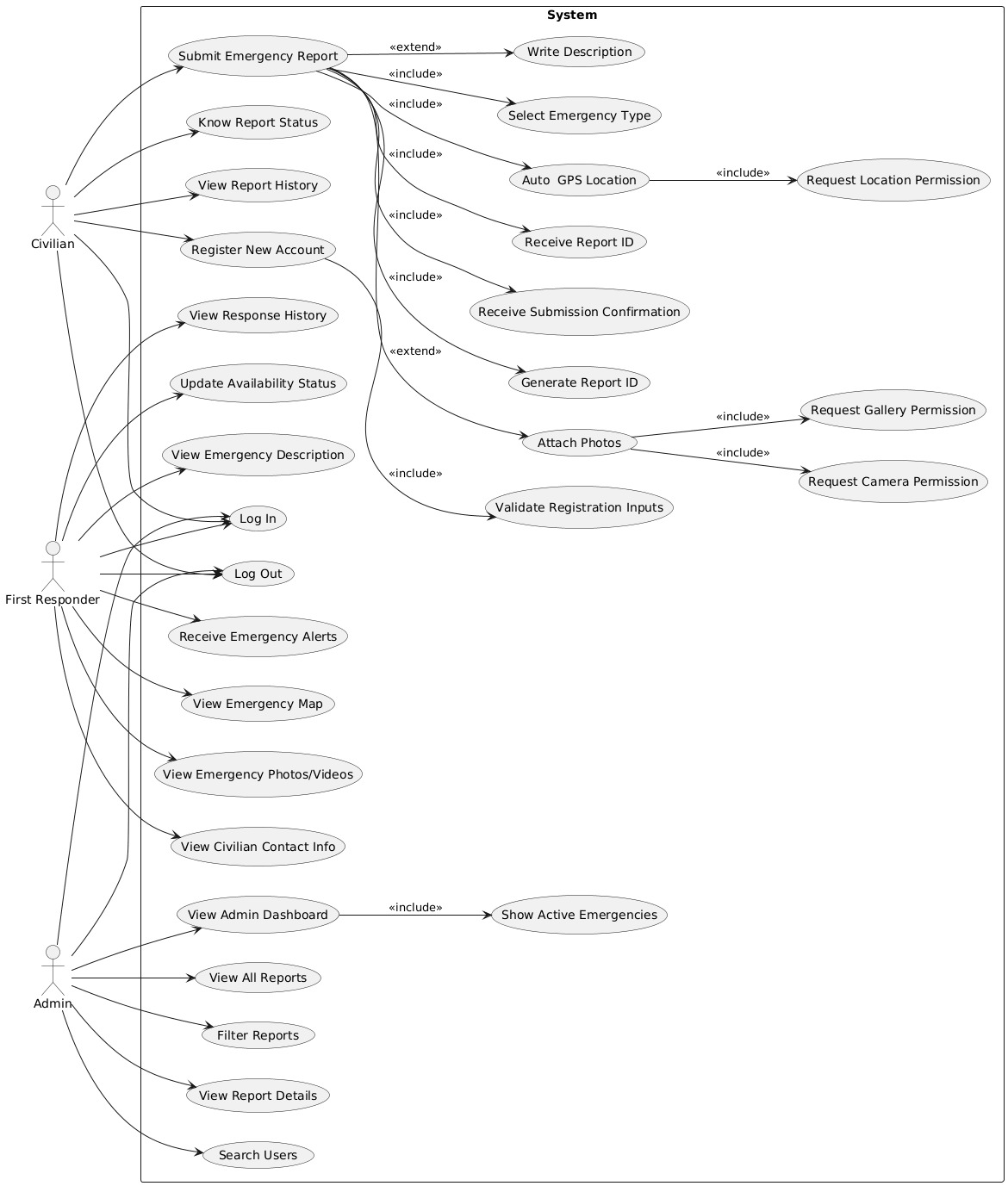
This diagram illustrates how different users (citizens, first responders, and administrators) interact with the system. It shows the main system functionalities such as registering and logging in, submitting emergency reports, attaching photos, viewing report status and history, receiving alerts, and managing reports. It highlights the interactions between users and the system.
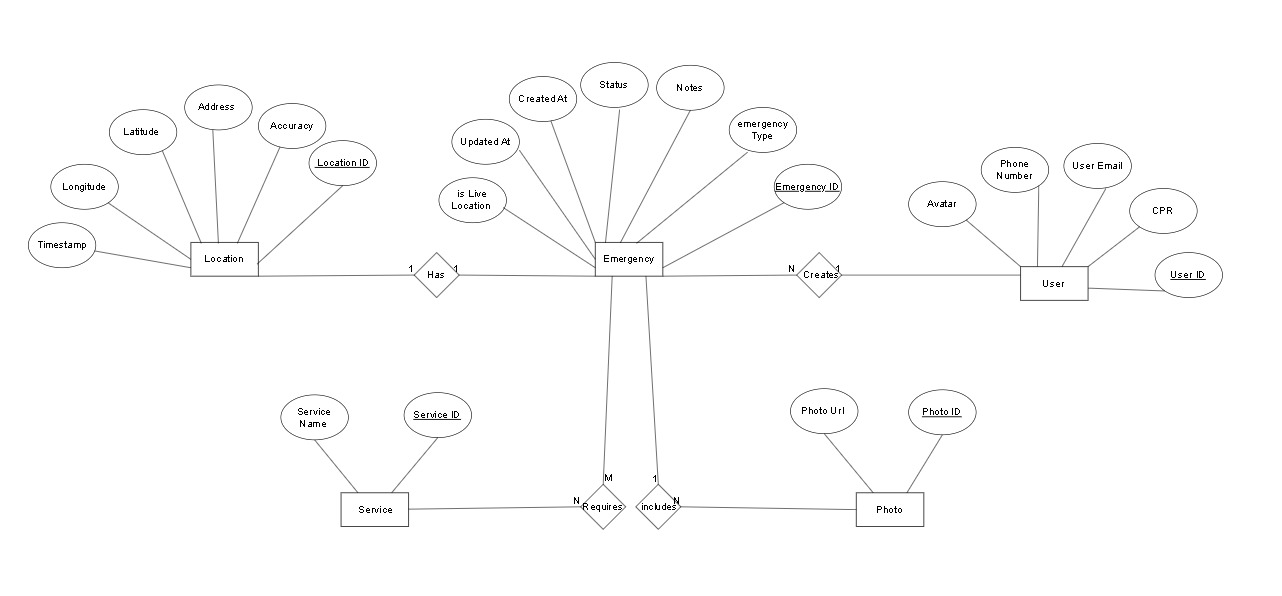
This diagram represents the structure of the system database by showing the main entities such as users, emergencies, locations, services, and photos. It also illustrates the relationships between these entities, including how a user creates an emergency report, how each report is linked to a location, includes photos, and requires one or more services.
This screen displays the main emergency services and provides quick access to the SOS feature through a simple and user-friendly interface.
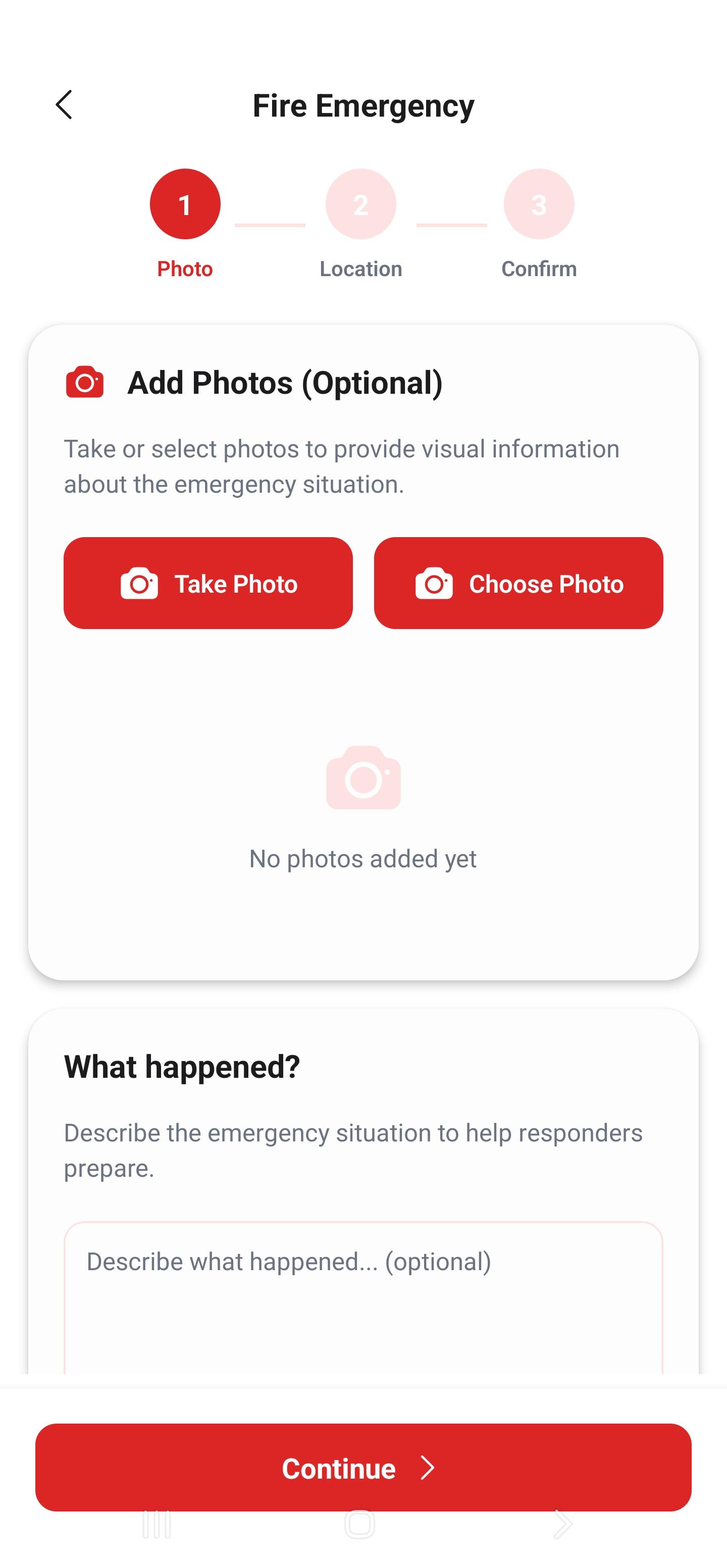
This screen allows the user to upload photos, write a description of the emergency case, and continue the reporting process.
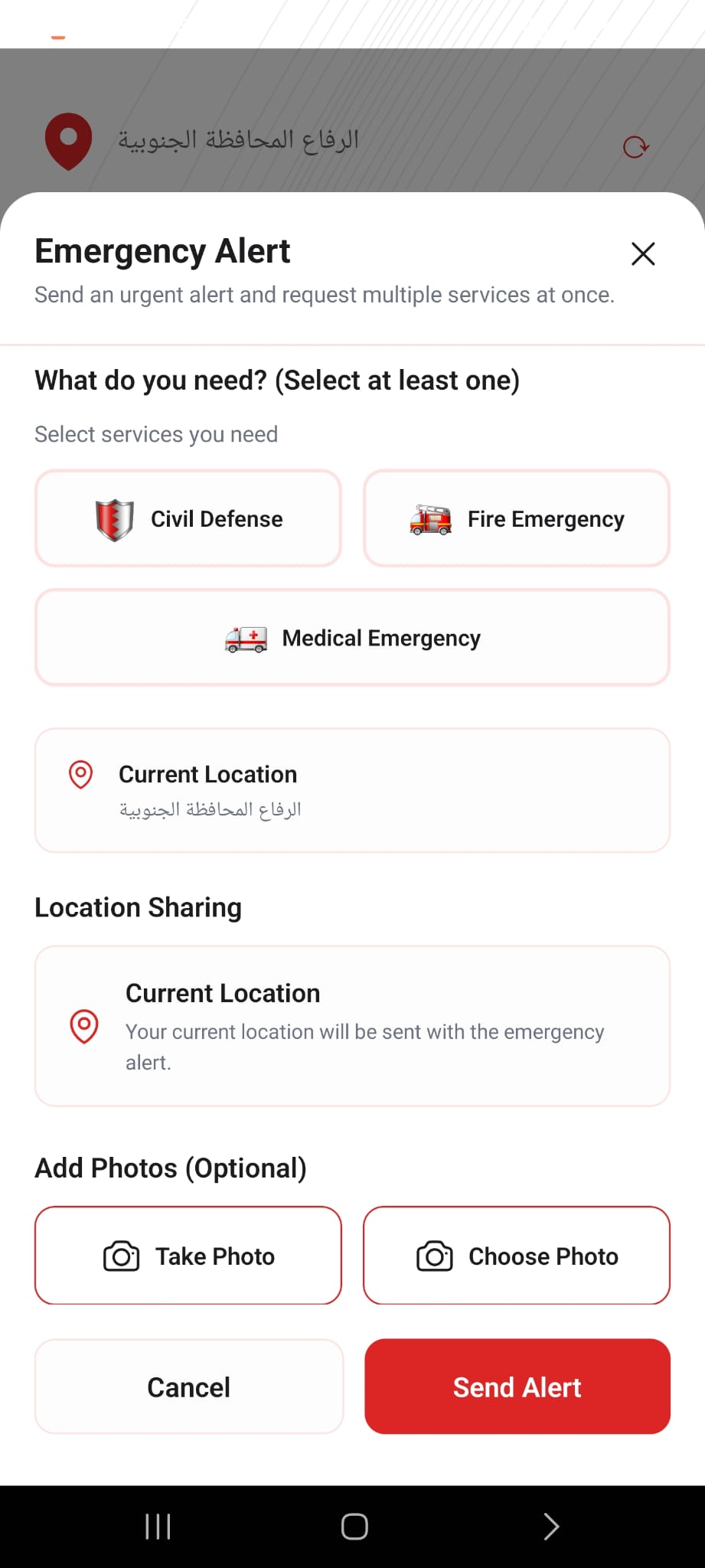
This screen allows the user to request multiple emergency services at the same time during critical situations.
This project presents a smart emergency response application designed to help civilians quickly report incidents and request the appropriate services, including Medical, Fire, Civil Defense, and Public Services. The system enables users to send accurate information such as location, photos, and descriptions, while allowing authorities to efficiently manage, track, and respond to cases. Developed following the software development life cycle, the solution addresses key communication challenges and improves coordination between users and responders. Overall, the project contributes to faster response times and aims to enhance public safety within the community.
Designer / Developer
Designer / Developer
Academic Supervisor
We welcome any questions, feedback, or suggestions regarding the project. Feel free to contact us through email, and we will be happy to assist you and respond as soon as possible.